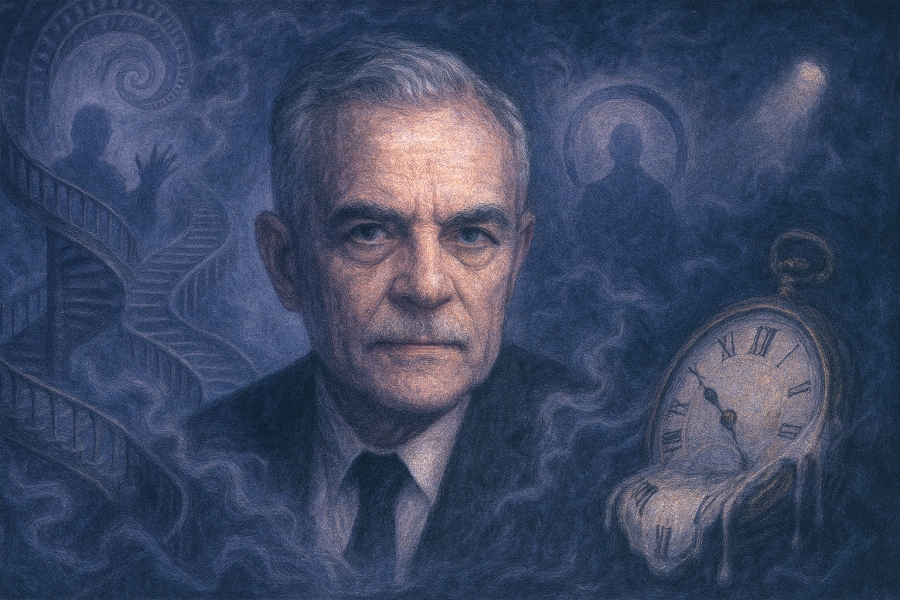
In the world of hypnosis, not every path to trance is straight and narrow. Some are winding, curious, and even a little bewildering, and that’s exactly the point.
Welcome to the fascinating realm of confusional inductions.
What is a Confusional Induction?
Unlike the traditional approach of guiding someone gently into relaxation or painting mental images of a peaceful beach, a confusional induction takes an entirely different route. It doesn’t coax the mind into calm, it overloads it. It distracts it. It intentionally tangles it up in so much complexity that the conscious, logical mind throws up its hands and steps aside. And in that quiet surrender, the unconscious steps forward.
Think of it like this: Have you ever been so puzzled by something, an abstract riddle, a contradictory instruction, a story that goes in circles, that your brain just… gave up trying to make sense of it? That moment of letting go is the doorway confusional inductions walk through.
Where Did Confusional Inductions Come From?
Long before hypnosis was understood scientifically, confusion was already being used as a tool for change. In Zen monasteries, monks would sit with koans, seemingly absurd riddles like, “What is the sound of one hand clapping?”, not to solve them, but to reach beyond rational thought. In the world of stage hypnotism, paradoxical commands like “Stand up while sitting down” often led to laughter, mental stumbles, and moments of open-mindedness.
And then came Milton H. Erickson.
Born in 1901, Erickson was a quiet revolutionary. While his predecessors barked orders, “You are getting sleepy”, he spun stories, built metaphors, and subtly twisted logic. He discovered that when people are gently disoriented, when their conscious minds are too busy trying to follow the thread, they stop resisting. And in that moment of softened awareness, change can begin.
Erickson’s inductions were never forceful. They were invitations. He might blur the line between memory and imagination, or ask a client to complete a task with rules that kept changing. Through loops and tangents, people would suddenly find themselves deep in trance, unsure how they got there, only knowing they felt different.
Why Use Confusional Inductions Today?
Modern hypnotherapy still draws heavily from Erickson’s legacy. Confusional techniques are especially powerful for those who struggle with overthinking, who analyze every suggestion, who resist being told what to do. When logic itself becomes the obstacle, confusion gently clears the path.
Rather than battling resistance, a skilled hypnotherapist uses confusion to sidestep it entirely, transforming disorientation into transformation.
So… was Erickson the originator of this method? Or simply its finest expression? In truth, he was part of a lineage stretching back through temples, stages, and salons. He brought precision to mystery, and in doing so, he changed hypnosis forever.
Today, confusional inductions are not just hypnotic “tricks”, they are refined, compassionate tools for helping the mind loosen its grip and allow new possibilities.
And that’s where the real change begins.
Curious to experience how confusion can lead to clarity?
Call Scott Duvall at 503-238-4428 or visit www.pdxhypnosis.com to schedule your free consultation. Your unconscious mind already knows the way, let’s help you follow it.